Style: Contemporary
Origin: Italy
Regions of Popularity: Europe and America
The Neoclassical style, a subset of contemporary design, emerged in the 18th century aiming to revive simplicity and order in architecture. It refers to buildings inspired by the classical architecture of ancient Greece and Rome. Neoclassicism arose as a reaction to the Rococo and Baroque styles, with the prefix "neo" indicating its modern reinterpretation. The second part of the term highlights its inspiration from Roman and classical Greek architecture. Rather than merely replicating classical elements, this style focuses on the overarching logic of that era. Rococo architecture featured excessive decorative details, and in response to this extravagance and asymmetry, Neoclassicism emphasized simplicity and smooth wall surfaces.
The first Western architectural style introduced to Iran appeared during the reign of Naser al-Din Shah in the late 19th century as a symbol of modernization and significantly influenced Iranian architecture. Today, Neoclassical architecture is recognized as the new classical style in contemporary buildings. Neoclassical relief work tends to be flatter and is often placed within frames or decorative friezes. Key characteristics include neat, clean lines and a simple, orderly appearance.
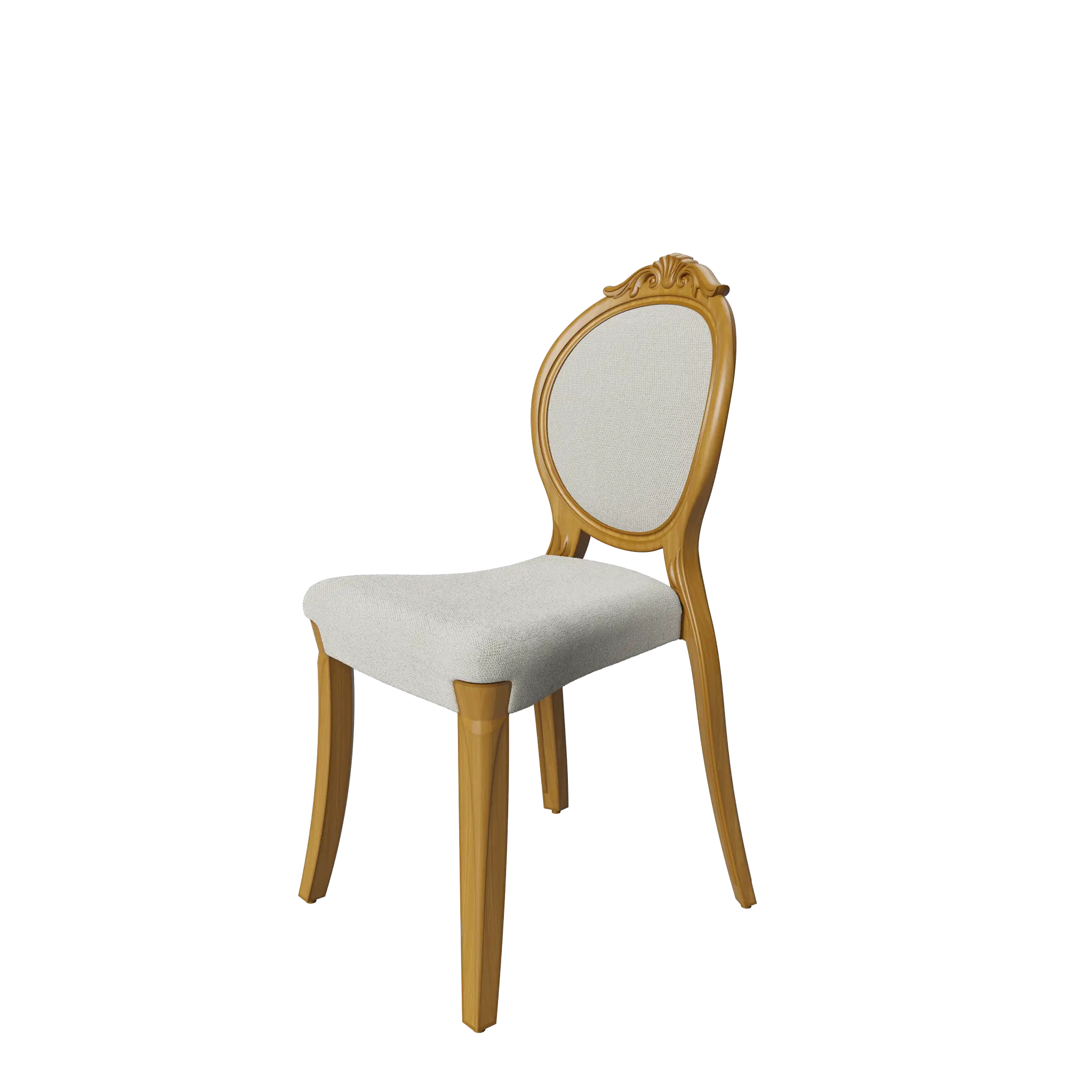
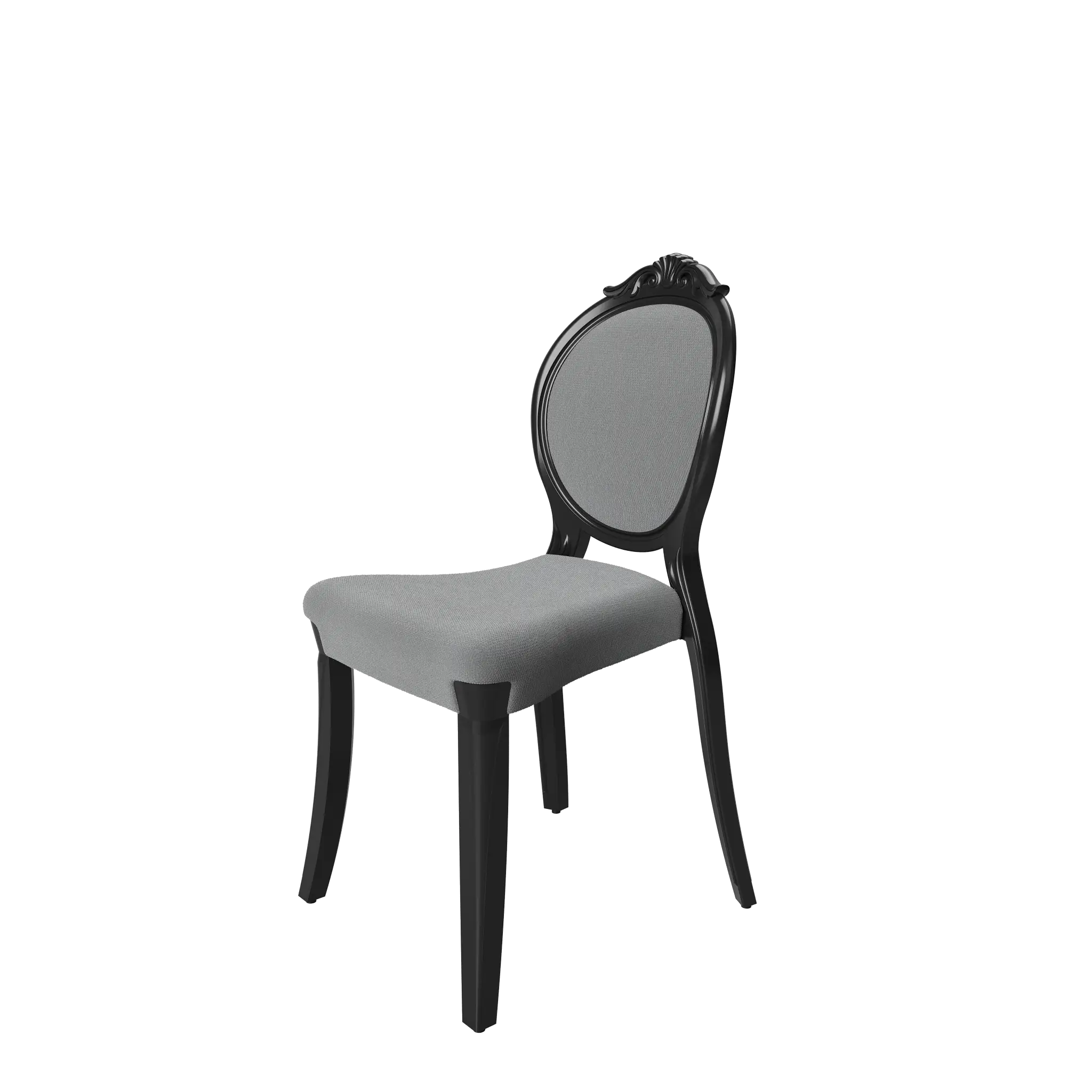
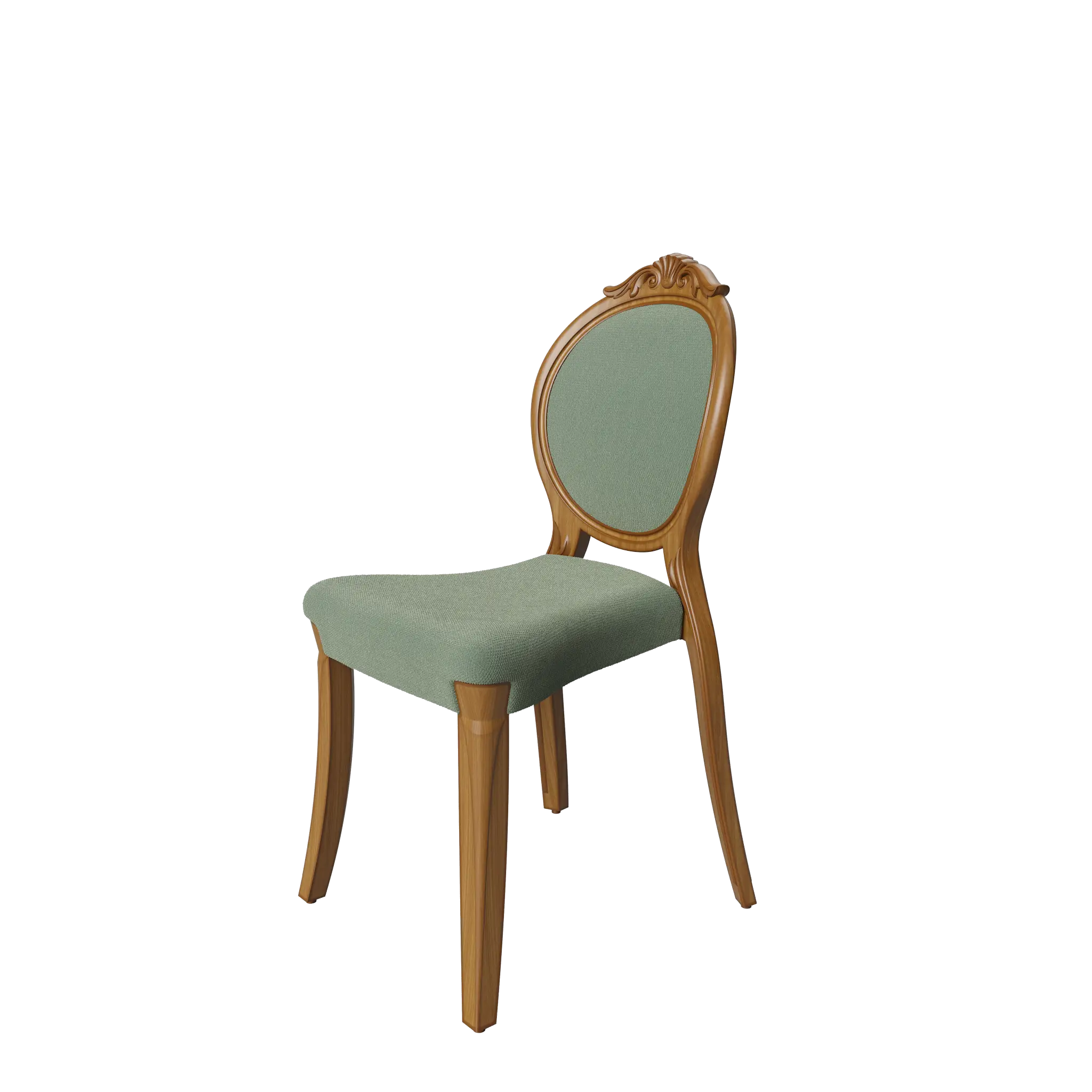
This chair design is a fusion inspired by the famous Louis chair with an oval back, enhanced by prominent Neoclassical ornamental elements on the crest. The arms’ legs are designed slightly thicker and simpler to provide better support and stability.
The Louis chair originally belongs to the Baroque style from the Louis XV period. After this era, there was a decline in the extravagance associated with the French monarchy. Neoclassicism meant that while ornamentation retained its form, it adopted more masculine proportions and reduced delicacy.
A defining feature of Louis XV furniture is the use of curves, a trend that began during Louis XIV’s reign. Curved and diagonal lines are noticeable at the top and in the connecting rails of the chair’s back.
As mentioned, Baroque originated in Italy. In interior architecture, Baroque is heavier and more formal, whereas Rococo is lighter, more intimate, and fanciful. This is why Baroque is considered a masculine, formal style.
Another hallmark of Baroque is the contrast of light and dark colors combined with a play on filled and empty spaces in decoration. Luxurious fabrics with colorful patterns are commonly used. The most important feature of this style is maintaining unity and balance among all elements of the interior, which can be observed even in the smallest details of Baroque décor. Colors and lighting in Baroque interiors are designed to evoke dynamism, vitality, and liveliness. Generally, warm colors dominate this style, including deep red, green, burnt brown, yellow, ivory, cream, and beige. Neutral tones like gray and silver are also used to enhance the environment’s beauty.
Forms and patterns in this style reflect Renaissance humanist thinking. Regardless of their correctness, these ideas introduced innovative approaches to human life, which can be sensed in the interior decoration through designs, color combinations, lighting, and more. Unlike classical décor that emphasizes static and heavy forms, this style employs dynamic, lively shapes. Furniture in this style features curved legs, intricate classical forms, and exquisite ornamental carvings on hardwoods such as oak and walnut, often upholstered with fabrics and metal decorations. Sometimes, furniture colors contrast with the dominant environmental hues to enhance visual impact.
Inspired by these principles, the Aram chair presents a modern design that, despite material changes, significantly increases accessibility and usability. The removal of the seat frame simplifies and modernizes the design, allowing it to fit seamlessly into contemporary spaces. At the same time, subtle decorative elements soften the design, creating a beautiful fusion of Baroque and Rococo styles.
Aram restaurant chair, similarly inspired, offers a new design that, despite changes in construction materials, greatly improves purchase and usability opportunities. The elimination of the seat frame simplifies and modernizes the design, helping it find its place in today’s contemporary and modern interiors, while added subtle decorations soften the design and blend Baroque and Rococo aesthetics.
Forms and patterns in this beautiful style are derived from Renaissance humanist thought. Regardless of accuracy, this philosophy introduced innovative approaches to human living, which can be perceived in designs, color combinations, lighting, and more within interior decoration. Unlike classical décor that focuses on static, heavy forms, this style uses dynamic shapes full of vitality. Furniture typical of this style includes curved legs, complex classical forms with ornate carvings on woods like oak and walnut, fabric upholstery, and metal adornments. In some cases, furniture color contrasts with the dominant room palette to make pieces stand out more.
The combination of light and dark colors alongside the play of positive and negative space is another key feature of Baroque decoration. Luxurious fabrics with colorful patterns are frequently used.
The primary features of this style include maintaining unity and balance across all interior elements, observable even in fine Baroque décor details. Environmental factors such as color and lighting must convey a sense of dynamism, vitality, and liveliness. Warm colors predominate, including dark red, green, burnt brown, yellow, ivory, cream, and beige. Neutral colors like gray and silver also enhance the aesthetic appeal.
Recommended sets for the Aram chair:
The Aram chair, with its contemporary style and slight resemblance to the Louis oval-back chair, pairs well with the Negar table due to its simple design and subtle decorative details.


 فارسی
فارسی
 العربية
 Русский