Style: Classic
Origin: England and France
Region of Popularity: England and Europe
In the mid-18th century, an English craftsman named Thomas Chippendale created a unique style that combined the elegance of Rococo, Chinese decorations, and forms borrowed from Gothic and Neoclassical styles. Thomas Chippendale blended these styles into harmonious, unified designs and established what became known as the Chippendale style.
The carvings in this style were inspired by a fusion of French and Chinese influences—French delicate carvings combined with geometric and lattice patterns from Chinese furniture edges, such as tea tables—giving rise to Chippendale furniture. However, by the late 18th century, many of the intricate original carvings were largely forgotten and no longer used.
Chippendale furniture was the first English furniture style to become the most famous name in England’s furniture history, emerging at the peak of handcrafted furniture in Europe. Originally, Chippendale referred to an interior decoration style that included furniture as one element, but today especially in Iran, the term is used mainly to refer to a specific type of furniture. In short, the main characteristics of this chair style are the use of mahogany wood, open-back design, and Rococo-style carvings. The backrest is shaped like a vase with decorative spindles in various patterns, which were later modified by Chippendale and his contemporaries.
The Rococo furniture style was born in France during the reign of Louis XIV and reached its peak and maturity under Louis XV. Since France was the birthplace of this style, it greatly influenced its development. Rococo designs feature twisting, swirling patterns with curves extending in nearly all directions. Skilled artisans applied gilded bronze veneers, creating exquisite and majestic works. Animal-shaped, intricately carved and delicate legs replaced the Baroque columnar legs commonly seen before.
English Rococo shows some variation with a decorative curved single leg appearing in designs, which encouraged European and global furniture makers to adopt this style as it was more affordable than French Rococo, which used expensive materials.
The form and design in this style are elegant and grand, bearing strong resemblance to classic and Baroque décor styles. The furniture is light and comfortable, with extensive use of curved lines. However, Rococo designs tend to be simpler than classic styles. Circular motifs are widely used in this style. The lines are generally soft, curved, and circular. Furniture bodies are made of wood and have curved legs. Elaborate, magnificent carvings on wooden surfaces are a hallmark of this style as well.
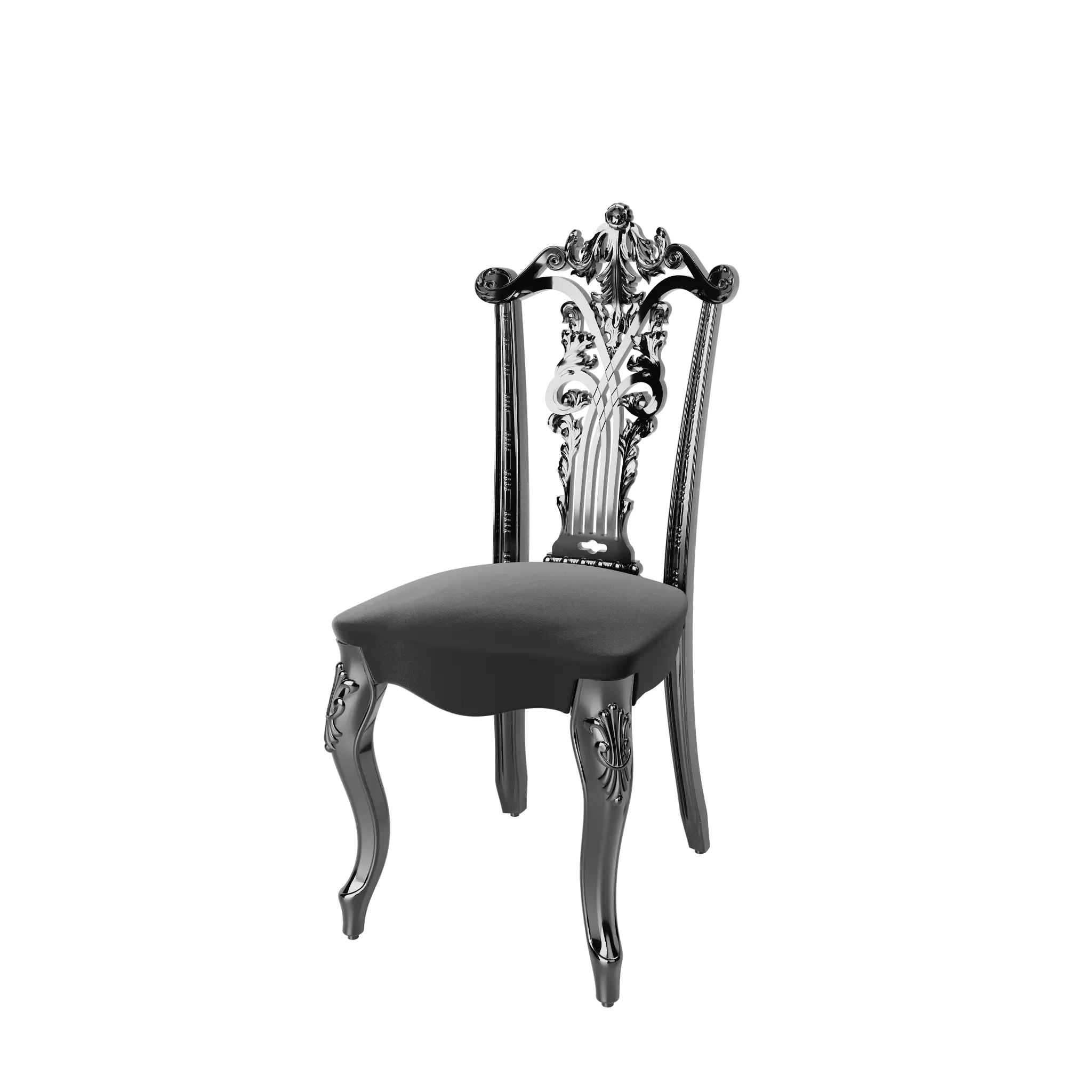
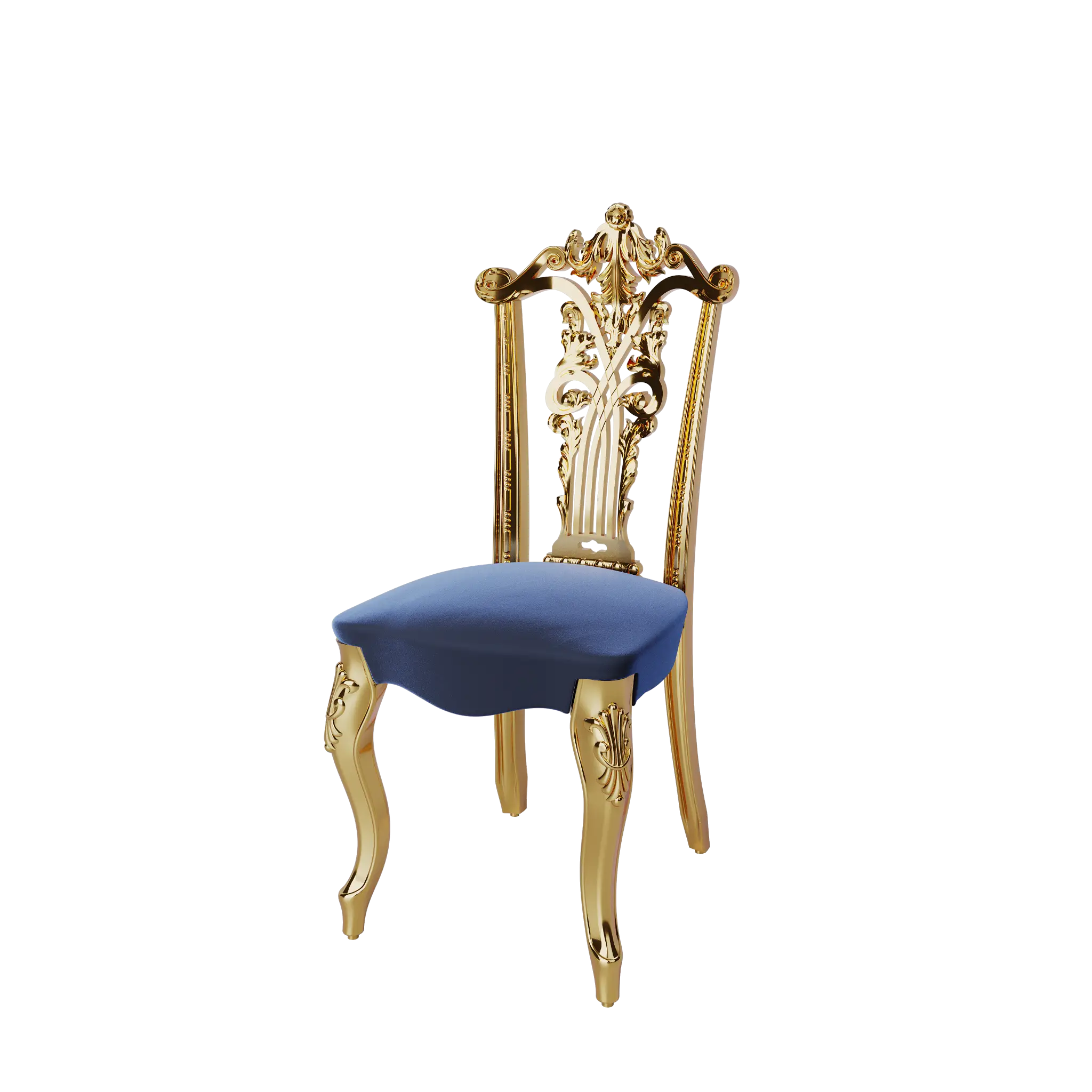
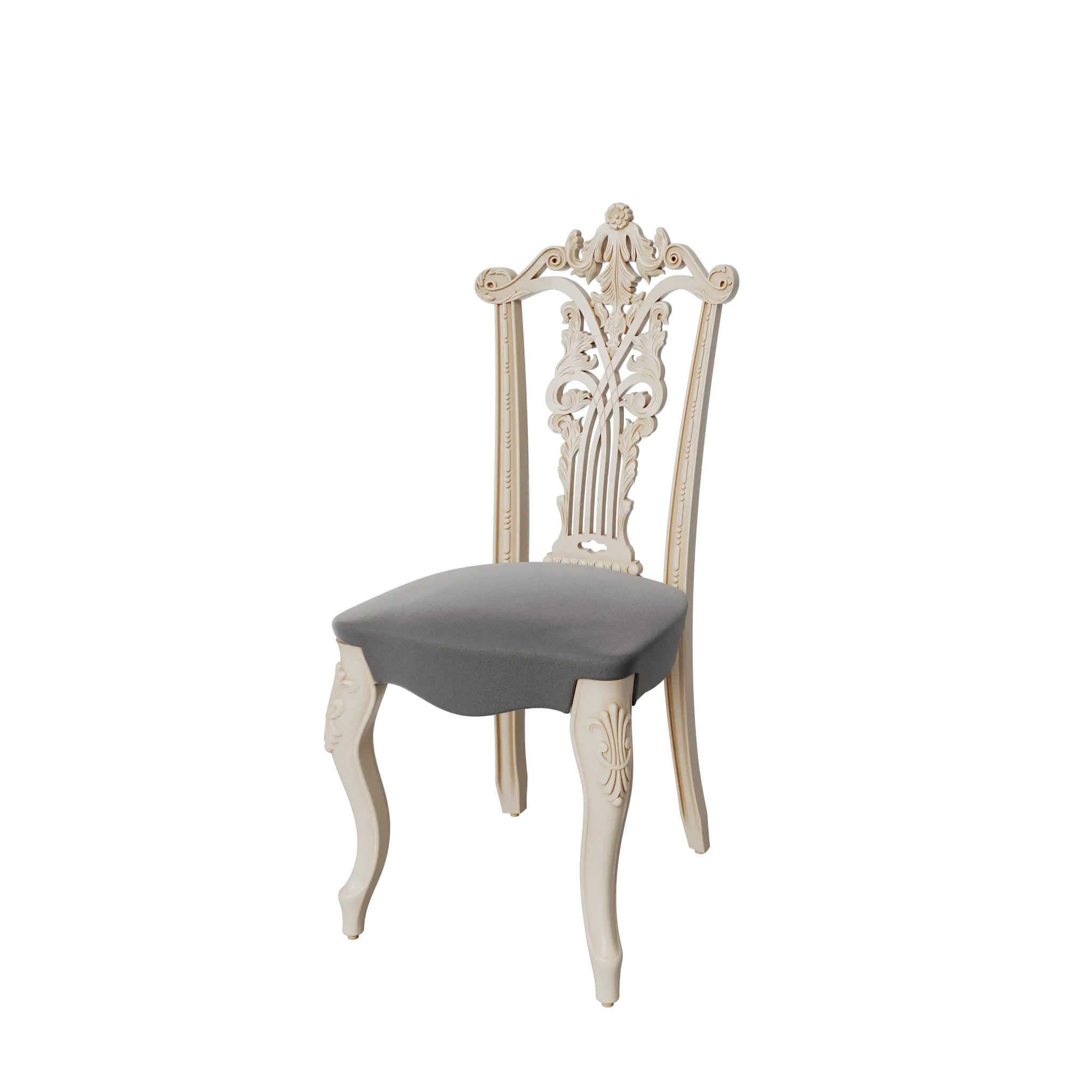
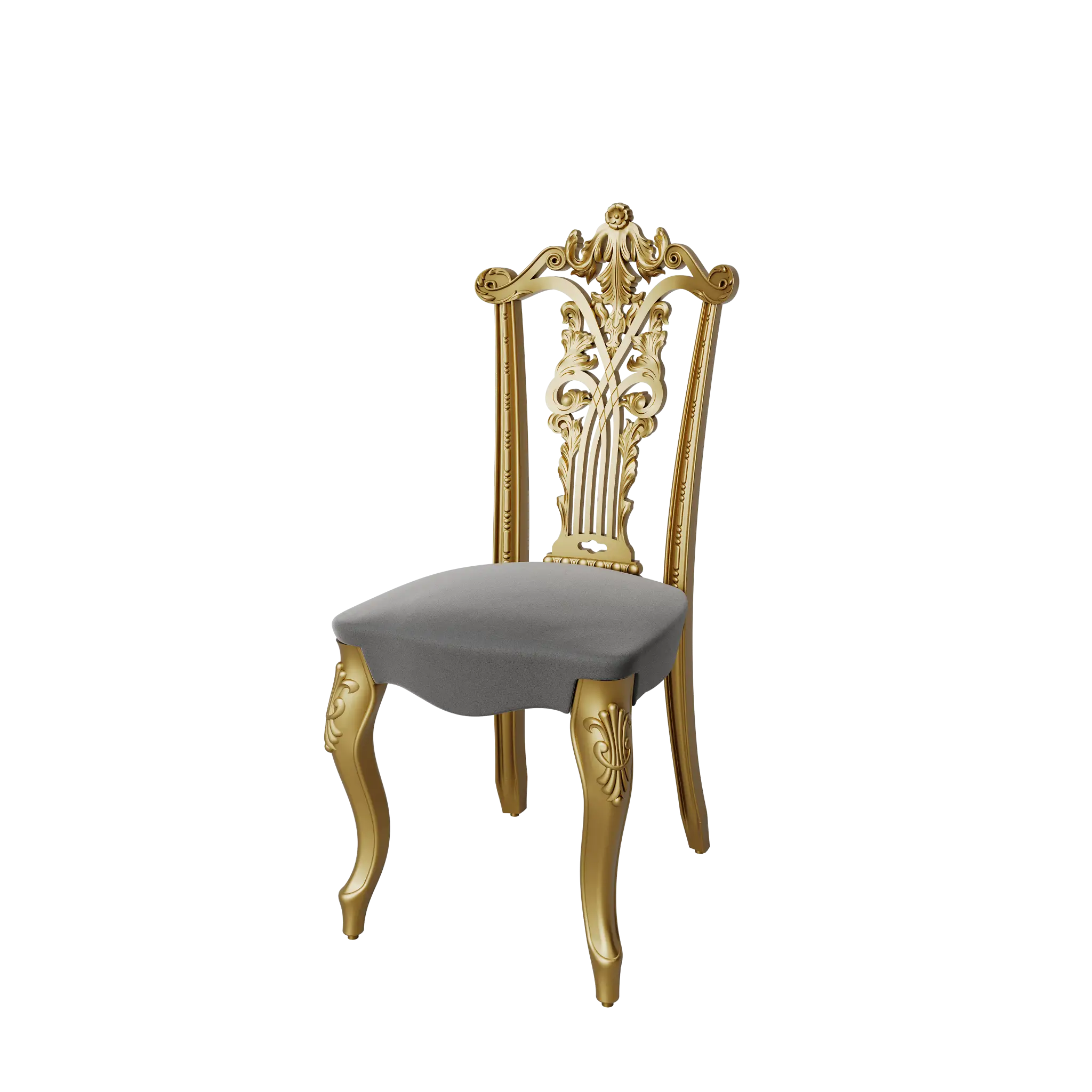
The Sepehram polymer banquet chair is a hybrid design inspired by both Chippendale and Rococo styles. Artistically, the chair’s open-back is inspired by Chippendale elements, featuring curved, decorative Rococo-style spindles. The seat and legs are designed with lightweight, circular forms typical of Rococo furniture, creating a comfortable and elegant piece.
The form and design in this style are elegant and grand, bearing strong resemblance to classic and Baroque décor styles. The furniture is light and comfortable, with extensive use of curved lines. However, Rococo designs tend to be simpler than classic styles. Circular motifs are widely used in this style. The lines are generally soft, curved, and circular. Furniture bodies are made of wood and have curved legs. Elaborate, magnificent carvings on wooden surfaces are a hallmark of this style as well.
In summary, the main features of this chair are the use of mahogany wood, open-back design, and Rococo carvings. The backrest has a vase-like shape with decorative spindles in various patterns, later modified by Chippendale and his contemporaries.
Suggested sets for the Sepehram banquet chair:
The Sepehram chair and Negar table both belong to the Chippendale style and can be paired with the Paria table, which is also designed in the same style. Due to the similarity in leg shapes, the Sepehram chair can also be matched with the Sepehr table.


 فارسی
فارسی
 العربية
 Русский